Blind Descent supports one to four players in online co-op, and every player shares the same base. There is no local or split-screen option, so a group plays over the network. The base is not something you construct from nothing: it is an abandoned research facility you find, clear and hold.
That shared building is what separates the co-op from a squad shooter. The thing you defend is also the thing you all depend on.
One facility, four players
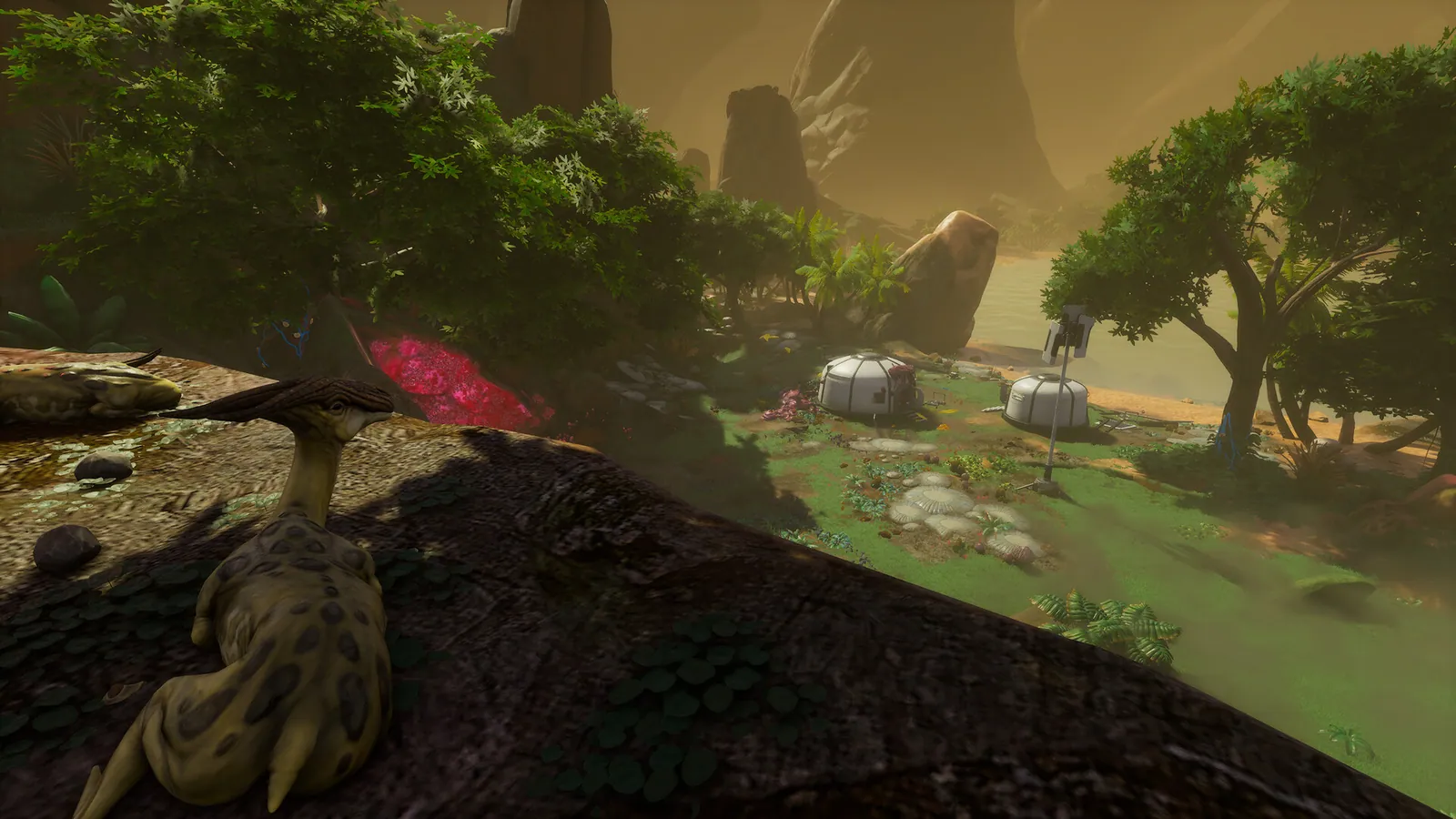
The facility is the hub of the loop. Tools get made there, the run gets supplied there, and the power has to reach it before contact with the surface can be restored. In co-op it is the same building for everyone rather than an instanced copy per player.
It also arrives damaged. The studio describes it as a plague-infested complex, and clearing it is the first job rather than a side activity. Everything after that — expansion, fortification, furniture, workstations — is built onto a structure you inherited rather than one you designed.
Splitting the work
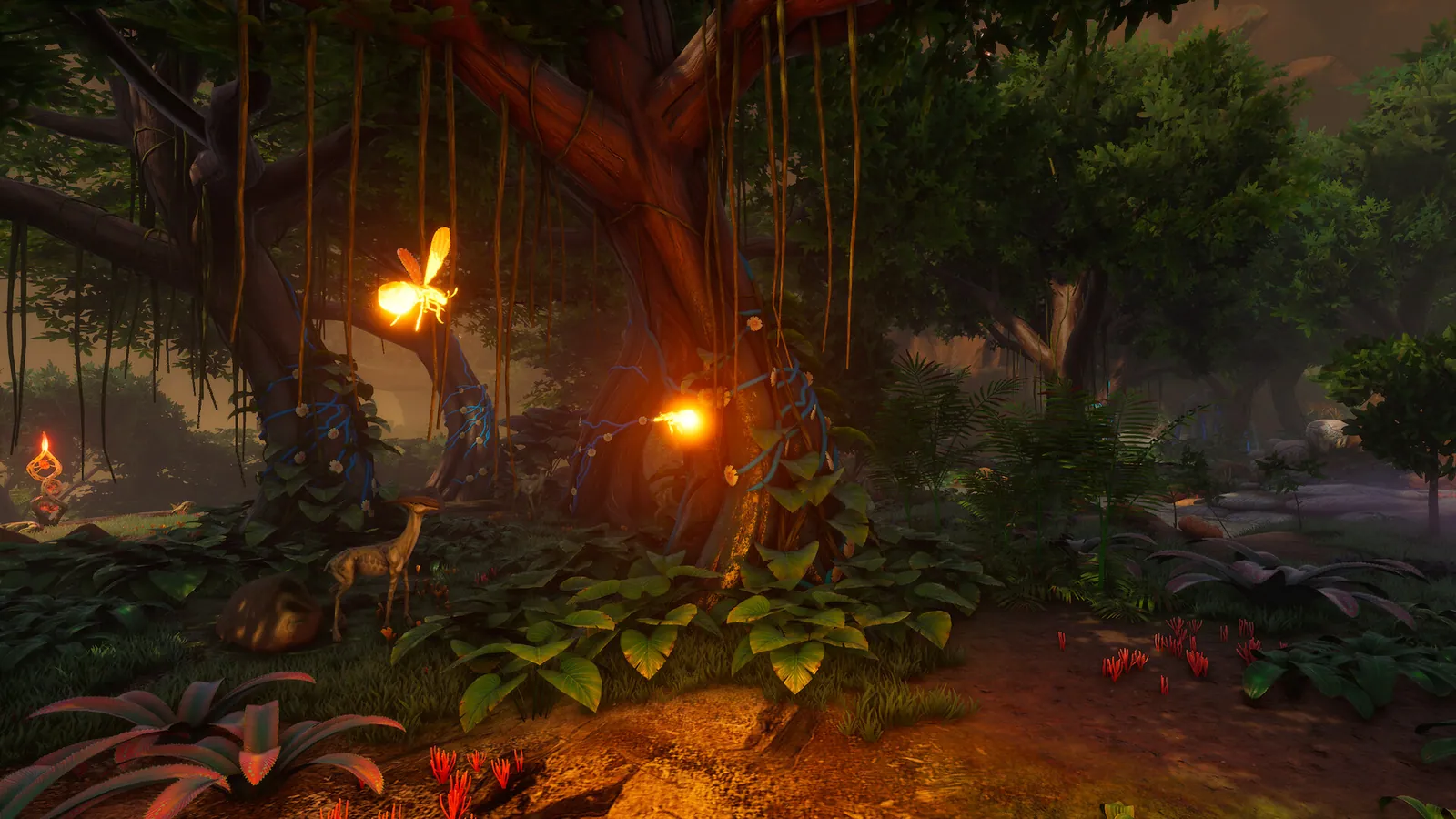
Four players do not need four fixed roles, but the loop has four natural jobs and a group that ignores one of them feels it within an hour.
| Job | What it covers | Why it matters |
|---|---|---|
| Scout | Pushing into new ground and scanning with the AI assistant | The team crafts from what the scout tags |
| Crafter | Running the stations, assembling tools, mixing medical items | A tool built from the wrong material is a rebuild |
| Keeper | Repairing structures, clearing growth, replacing worn parts | Neglect is what lets the ecosystem back in |
| Defender | Holding ground when something comes for the base | Someone has to be free to fight while others work |
Rotate rather than specialise permanently. The player who scanned an area is the one who knows what is dangerous in it, and that knowledge is worth more at the front than at the workbench.
Assign the keeper in the first session rather than assuming it will happen. If nobody claims the job, the base decays while the rest of the group explores, and the cost lands later as a group repair session instead of one person's mistake.
Progress belongs to the group
The save is shared, which means the base, the stock and the unlocked ground belong to the group rather than to whoever built them. A tool one player assembles is available to the others, and a wall one player raises protects everyone.
That is the argument for playing together even when you could play alone: division of labour is the only way the maintenance load stays ahead of the decay.
Upkeep is the real co-op job
Vines, fungal growths and creeping alien organisms react quickly to neglect, and structures also have to survive weather and creatures. A base left alone does not stay as it was built.
In a group the maintenance load grows with the base, because four players build more than one does and every extra room is another surface to keep clear. That makes the keeper a specialist position rather than a chore handed to whoever is least busy.
Solo is a complete way to play
One player is fully supported. Co-op is additive rather than required, and the single-player route through the campaign is the same route.
The playtest history shows the order the game was built in. The first open test on August 28, 2026 was single-player focused, and online co-op joined the build on October 14, 2026. Co-op was layered onto a working solo game, not the other way round.
Playing alone means doing all four jobs yourself, which slows the loop but does not break it. The AI assistant covers part of the scanning work a second player would otherwise do.
Voice, roles and the first descent
Four players without a plan spend the first hour doing the same thing four times. The split that works follows the systems rather than a class list:
- A scout who scans ahead and comes back with material names instead of guesses.
- A builder who owns the facility perimeter and keeps the overgrowth off it.
- A crafter who turns what the scout finds into tools and suppressors at the stations.
- A runner who moves between all three and covers the gathering nobody wants to do.
Roles are not permanent and nothing locks them in. They exist so that the first session produces a base with a working perimeter instead of four players each holding a corner of a room nobody finished.
Before the first session
Nothing about the mode needs preparation beyond installing the same build, and every store sells the same game on December 2. If your group spans platforms, the crossplay page covers what the store tags do and do not say.
Plan the first hour around the facility rather than the jungle. Clearing the complex as a group gives everyone the same mental map of the base before anyone wanders off to scan, and that map is what makes the split into jobs work on the second session.
Two notes for a first run. Read the crafting page before you touch a station, because material tags decide the tool and a bad assembly wastes the trip. Read base building before you expand, because the facility punishes size without upkeep.
The rest is scheduling. The Early Access page explains why the world you are playing through will keep changing after launch.
Is there local co-op or split-screen?
No. Co-op is online only, for one to four players, so each player joins from their own machine over the network.
How many players can join?
Up to four in total, meaning you and three others, sharing one base and one save.
Is progress shared?
Yes. The base, the stock and the unlocked areas are shared, and the group plays on one save rather than separate campaigns.
Can I play solo?
Yes. Single-player is fully supported, and co-op was added to the playtest build after the single-player test had already run.