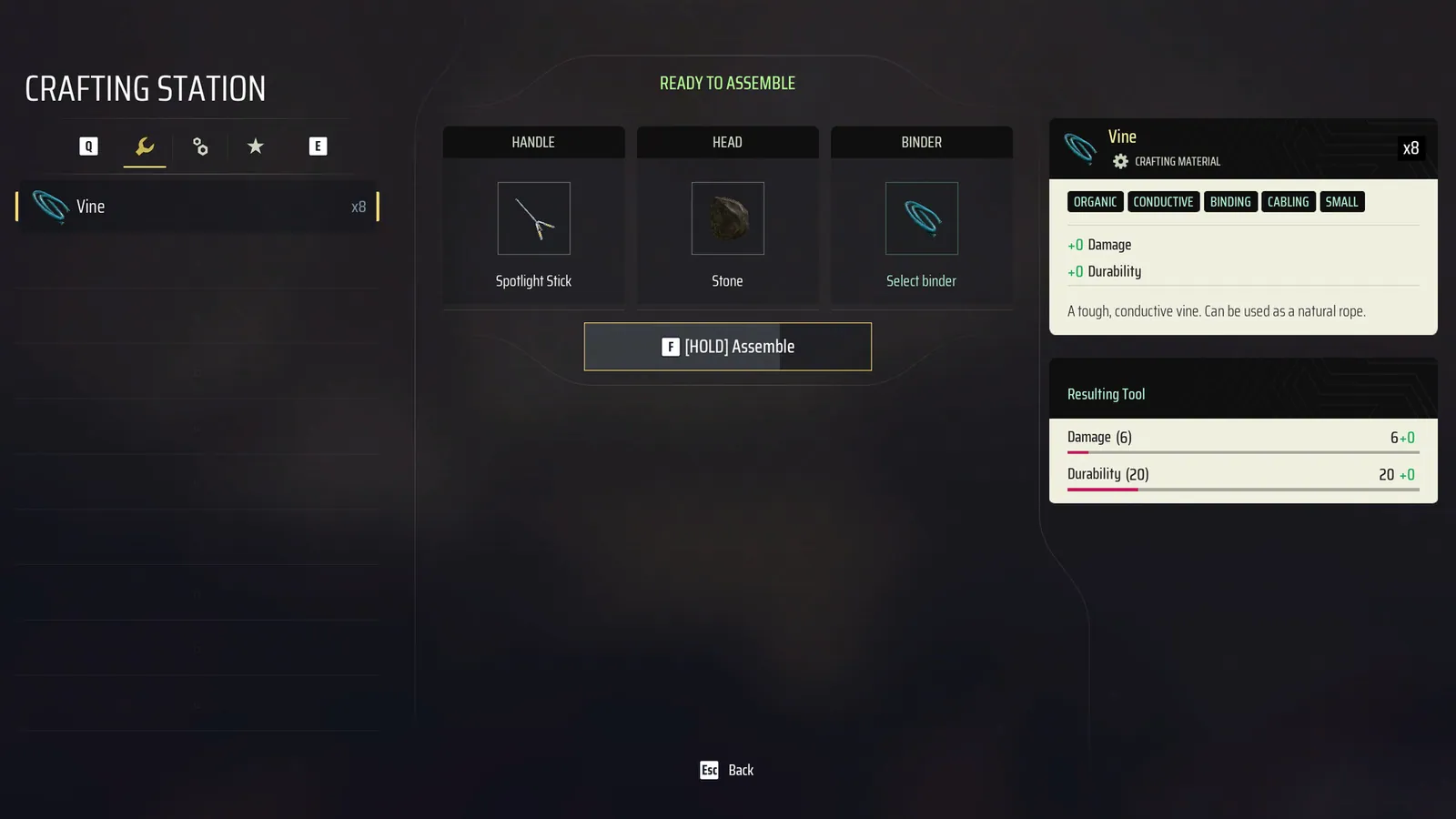
Crafting in Blind Descent works by assembly, not by recipe. You open a crafting station, drop a part into the handle slot, a part into the head slot, a part into the binder slot, and hold the assemble button. The output panel shows the resulting tool's damage, durability and damage type before you commit.
That is the whole loop, and it is worth understanding before your first hour is over, because a tool built from the wrong material is a tool you have to rebuild.
The three slots
Every assembled tool uses the same skeleton:
- 1Handle
The shaft. Sets reach and contributes tags such as LONG.
- 2Head
The business end. Determines what the tool does to a surface or a creature.
- 3Binder
What holds head to handle. A vine is the common early binder, and it carries its own properties.
The station labels the middle of the screen READY TO ASSEMBLE once all three slots are filled. Nothing is consumed until you hold the assemble input, so swapping a part out costs nothing.
Material tags do the work
Parts and materials carry tags, and those tags are the actual stat system. A vine reads:
Organic Conductive Binding Cabling Smallwith the description "A tough, conductive vine. Can be used as a natural rope." Put it in the binder slot and it contributes binding; put it anywhere else and you are paying for properties you are not using.
A finished tool carries the merged tag list. The stone mallet below was assembled from a pipe handle, so it reads HandlePipeLongIndustrial — and its description tells you what that combination is for.
Reading a finished tool
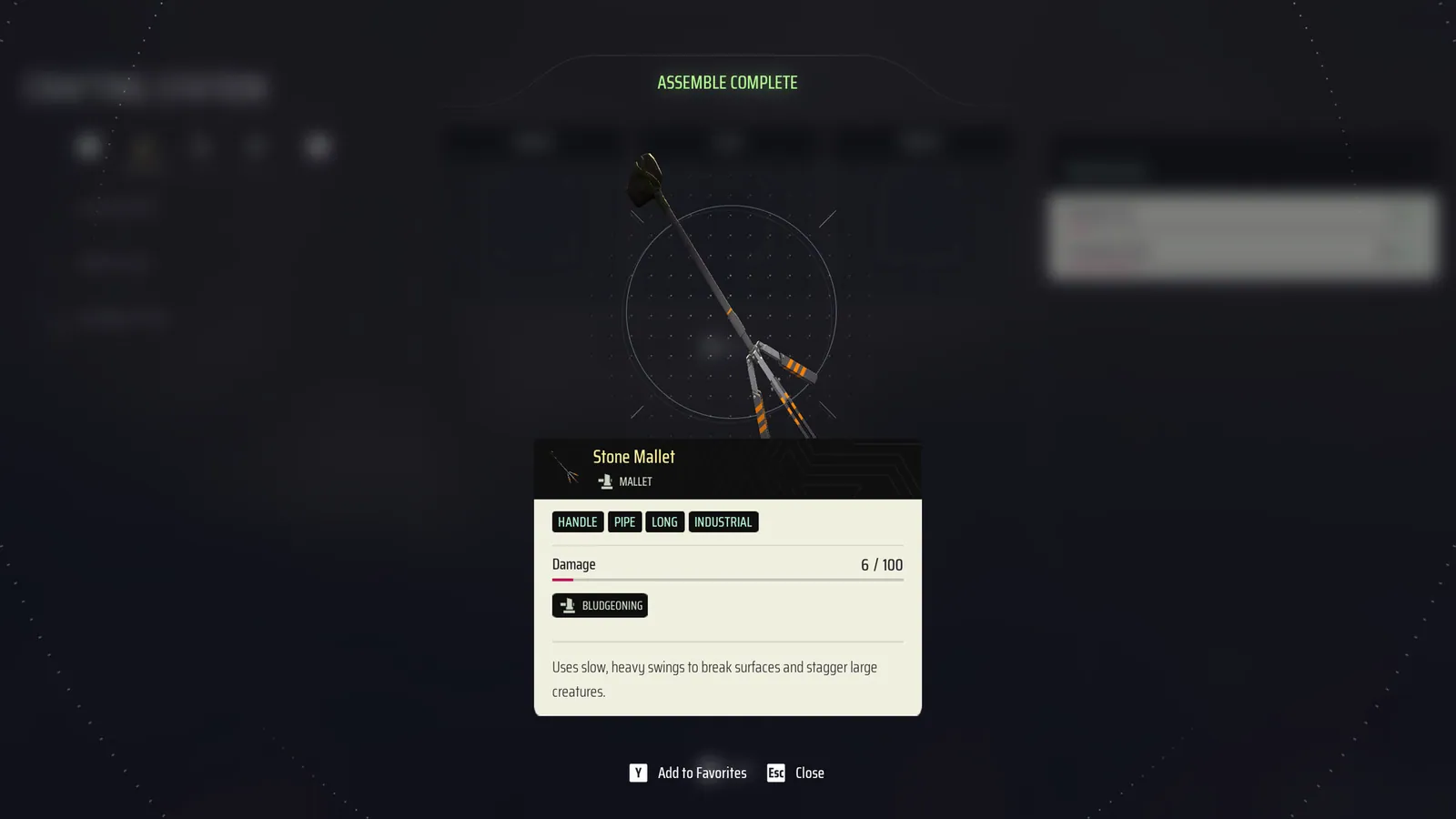
The result panel is dense but it answers four questions in order:
Damage6 / 100 TypeBludgeoning- Damage is the number before the slash, durability after it. A mallet at 6/100 hits softly and lasts.
- Damage type decides whether the tool is for creatures, surfaces, or both.
- Tags tell you which station discipline the tool belongs to.
- The description line is the honest summary: "Uses slow, heavy swings to break surfaces and stagger large creatures."
Stations split by discipline
Crafting stations are tabbed, and the tabs are disciplines rather than categories. Two are visible in the store screenshots:
- Crafting Station — tools and assembled gear, the handle/head/binder screen.
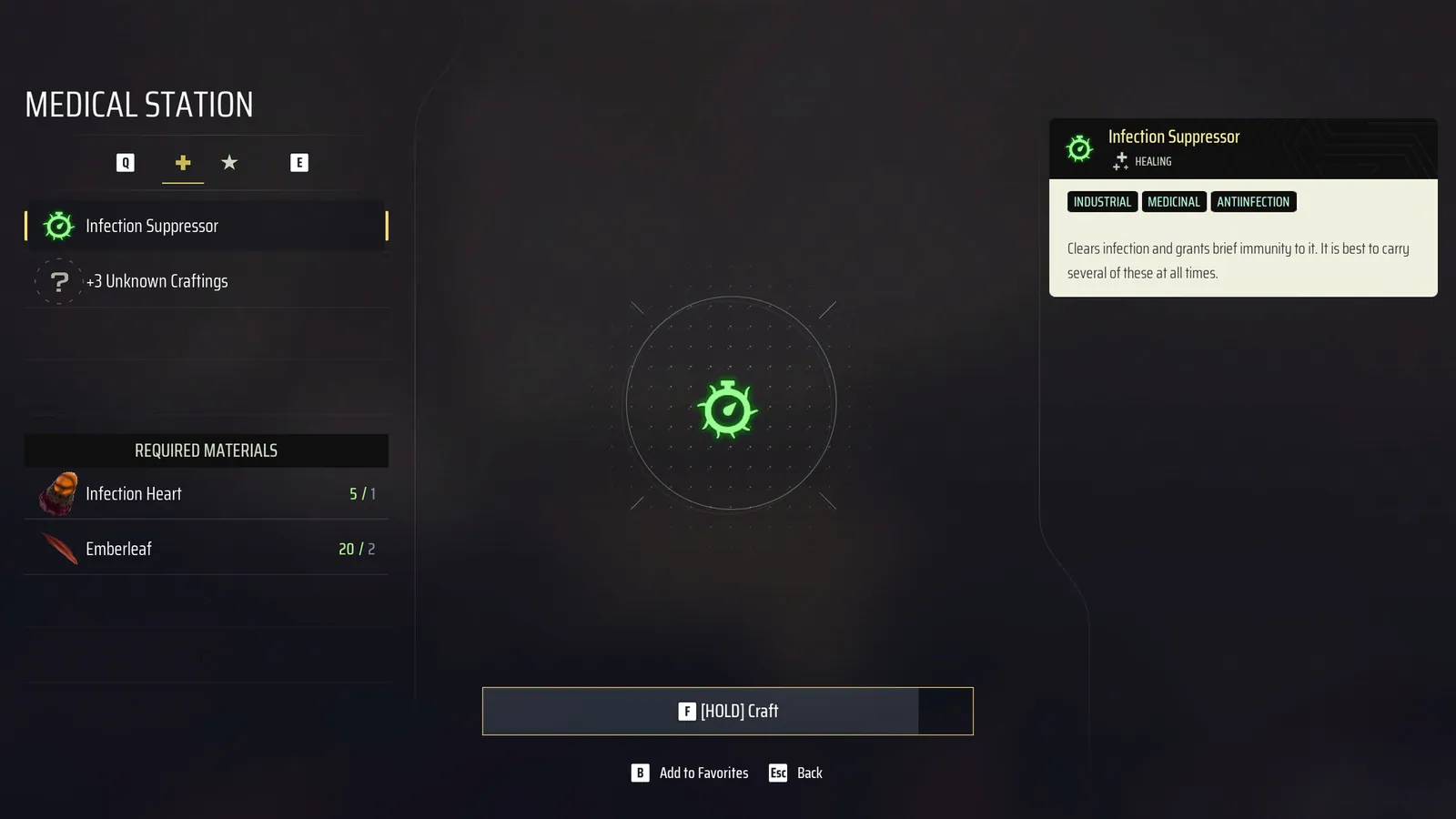
- Medical Station — consumables, including the infection suppressor.
The medical side runs on fixed recipes rather than assembly. The suppressor lists its materials directly: Infection Heart and Emberleaf, with a short description confirming it "clears infection and grants brief immunity to it."
What to craft first
Three priorities cover the opening hours:
- A cutting or breaking tool. Surfaces and foliage gate everything else, and the mallet line is the cheapest way through them.
- A binder stock. Vines are common and feed both tool assembly and rope use, so carrying a stack removes a return trip.
- Infection suppressors. They are consumables, and the item description recommends carrying several at all times rather than one.
Weapons fit around that. Bows, spears, axes and rifles all exist, and the two-handed ones trade stamina for reach — a patch during the playtest set two-handed weapons to consume half your stamina per shot while keeping the same shot speed as short weapons, which made stamina the real difference between weapon classes rather than damage.
Where the materials come from
Nothing is mined from a rock face with a coloured outline. Materials come out of the ecosystem, and the way in is observation: watching what a creature does to its surroundings, then harvesting the plant or the body that produced the effect.
The vine is the clearest early example, because it is both a material and a tool. It is tagged organic, conductive, binding, cabling and small, it stacks, and its own description calls it "a tough, conductive vine" that works as a natural rope. One item, three uses: binder for assembly, rope for traversal, cabling for anything electrical.
That overlap is the reason to scan before you harvest. A plant you walk past is a plant whose tags you do not know, and tags are what the assembly screen is actually reading.
Mistakes that cost a rebuild
Three errors show up early, and all three are visible on the assembly screen before you commit:
- A binder in the head slot. Binding properties in the impact position produce a tool that is good at holding things together and bad at hitting them.
- A long handle on a first tool. Reach is useful; a long tool is also slower to swing, and the description line tells you which trade you made.
- Ignoring the damage type. Bludgeoning breaks surfaces and staggers large creatures. It is not the same job as cutting, and a tool that does the wrong job is a wasted assembly.
Crafting in a group
With four players, the constraint is not materials but station time. A station is a physical object in the base, and the assembly screen is a single-player interaction — so the practical split is one person crafting while the others gather, rather than four people queueing at the same bench.
The exception is medical crafting. Infection suppressors are consumables that the item description says to carry several of, which makes them the one thing worth crafting in bulk before a long push rather than on demand.
Crafting and the rest of the loop
Crafting feeds exploration, and exploration feeds crafting. Resources come from studying the ecosystem rather than from nodes: observing how a creature interacts with its environment is what turns a plant into a material with usable tags.
That is why the creatures page matters to a crafter. Knowing what a plant does when you approach it is the difference between harvesting a binder and losing the run to it.