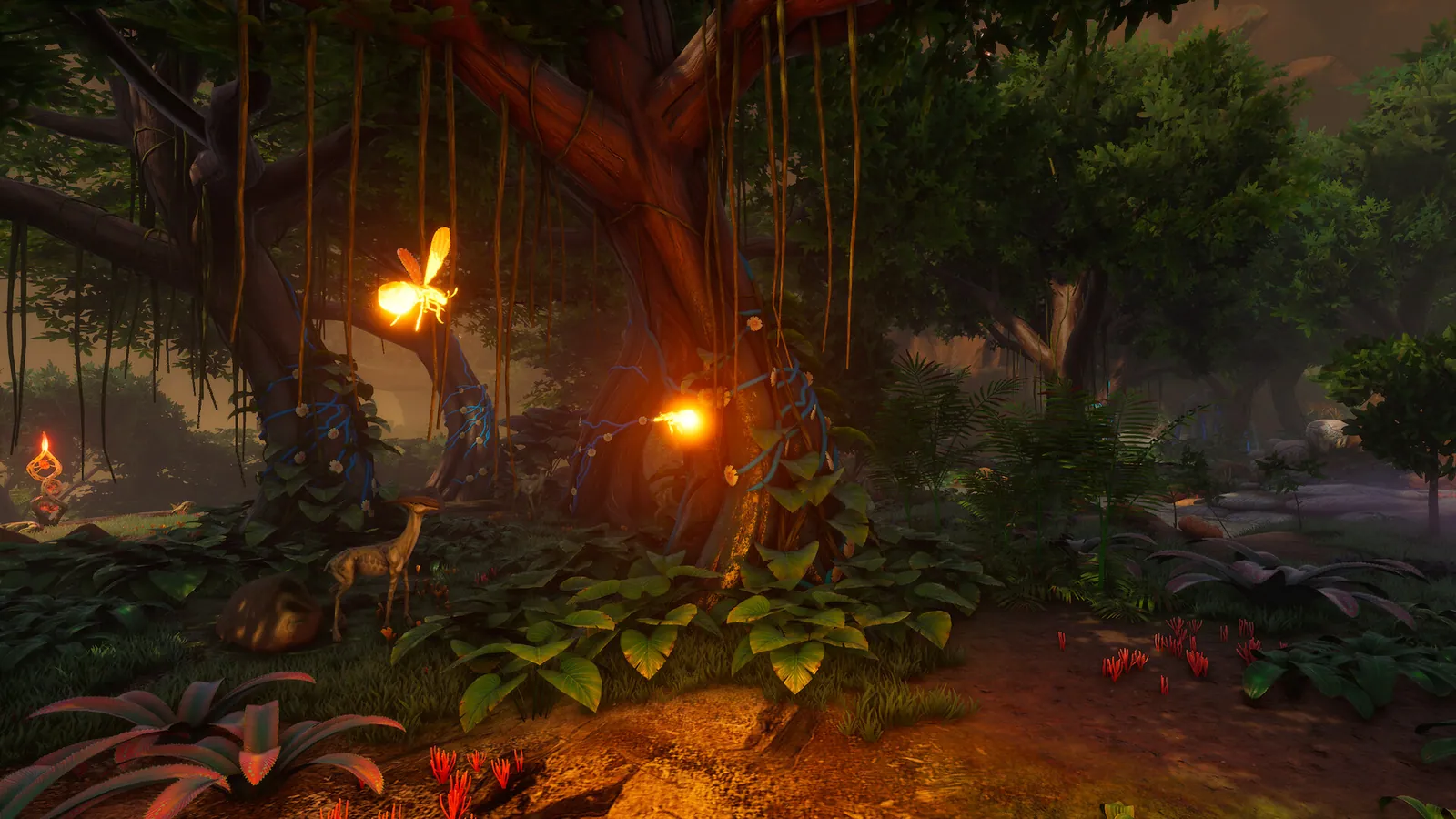
The first hour of Blind Descent is a fall, a scan and a decision about where to sleep. The elevator drops ten miles, most of the team does not survive the ride, and the surface stops answering. Everything after that is an attempt to turn a hostile ecosystem into a working route back up.
The order that holds up: scan what you meet before you touch it, take the facility you find rather than camping in the open, build one tool that does a job properly, and carry more infection suppressors than feels reasonable.
Ten miles down, with nothing on the radio
The setup is 2071 and a new mine on Mars. A vanguard team of up to four descends after a missing advance team, and the descent is the last thing that goes to plan. The elevator falls. A few people walk away from it. The link to the surface does not.
That leaves two objectives: find the missing team, and get power to the printer and the signal booster so the surface can be reached again. Both live deeper in, which is why the first hour goes into making the route survivable rather than making progress.
An AI assistant stays with the team, helping with exploration and with scanning. It is the closest thing to a briefing once the surface goes quiet, so it is worth listening to.
Scan before you take
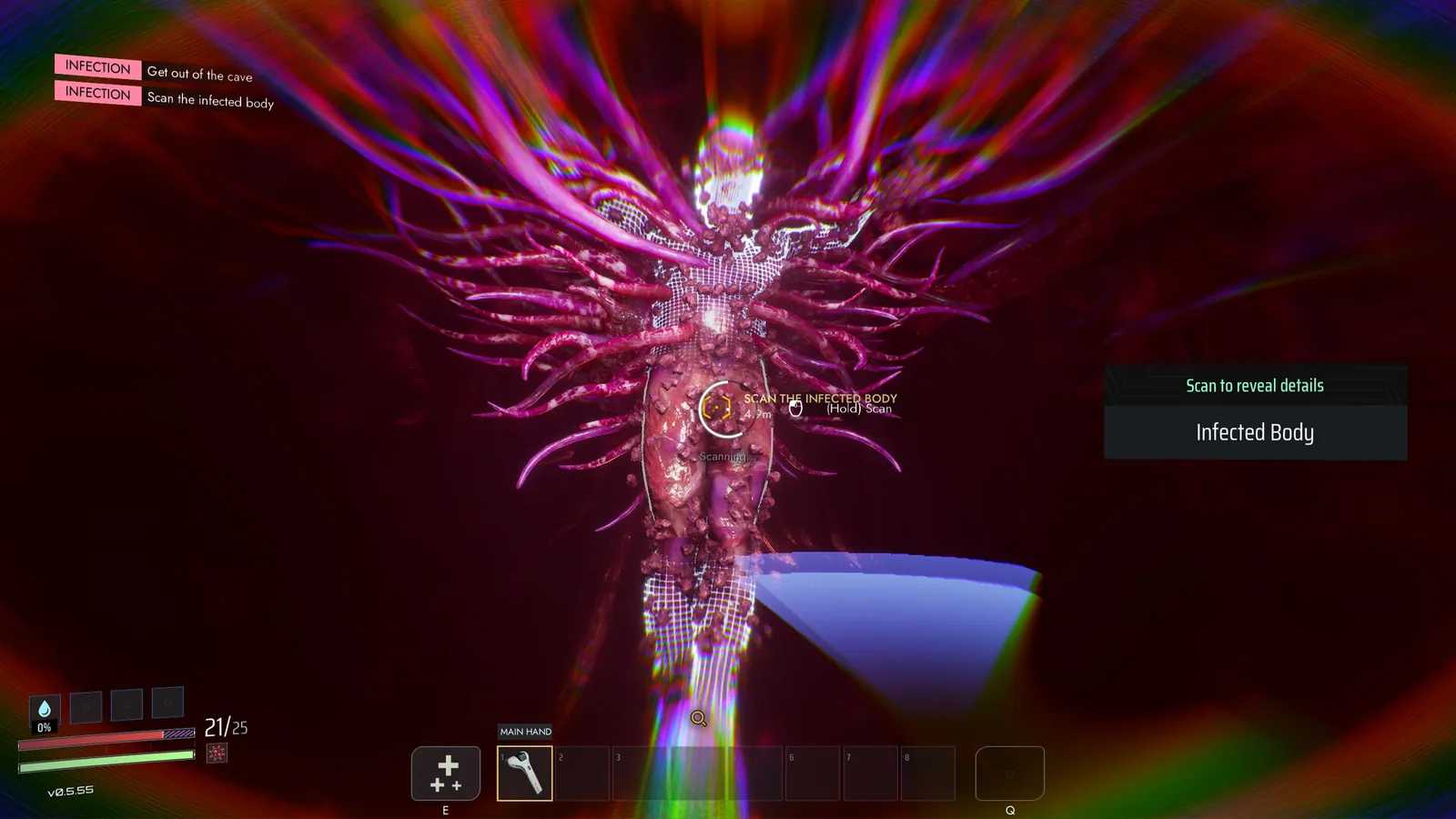
Scanning is the first habit and the one that pays for itself fastest. Anything the game considers worth studying gets a scan prompt, and holding it opens a panel with the details of the target — what it is, what state it is in, whether it is something you want in your hands.
The scan is also how infection gets identified. A body on the ground looks like scenery until the reticle settles on it and the panel names it an infected body; the prompt to scan it appears on the same screen as the infection warning. Learning to read that panel is the difference between harvesting a material and walking into a hazard.
The prompt appears on its own and reading the panel costs nothing, so the default is to scan everything once and harvest only what the panel explains. A plant you cannot identify is one to walk past.
The facility is a base you take, not one you build
Early on, the game hands over a base instead of asking for one. The underground is full of abandoned research facilities, and the one the story routes you through becomes the hub: a plague-infested complex that has been sitting open long enough for the local growth to move in.
Taking it means clearing it. Rooms are choked with vines and fungal growth, and the whole place reads as salvage rather than shelter. That is the point: the work of the first hour is making a few rooms usable, not laying a foundation.
This matters for pacing. A player who treats the facility as a checkpoint and pushes outward comes back to a worse building than the one they left, because the overgrowth does not wait. Base building covers that upkeep over a longer session.
Your first tool is three parts
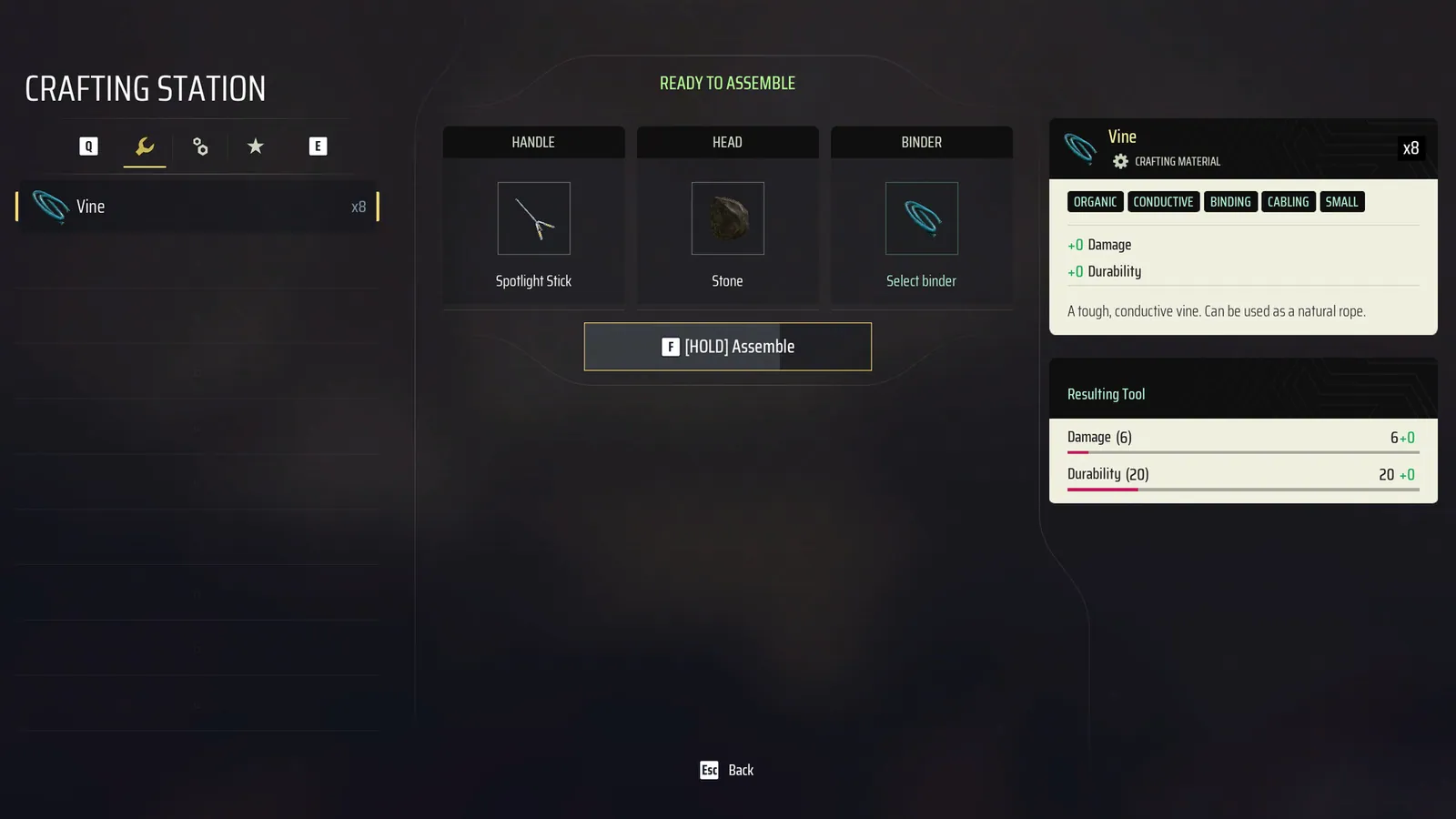
Crafting is assembly rather than a recipe list. A station gives you a handle slot, a head slot and a binder slot, and the middle of the screen reads READY TO ASSEMBLE once all three are filled. Nothing is consumed until the assemble input is held, so experimenting with a part costs nothing but time.
| Slot | What it contributes | What the screenshots show |
|---|---|---|
| Handle | The shaft, and tags such as long or industrial | A pipe handle on a stone mallet |
| Head | What the tool does to a surface or a creature | Damage and damage type on the result panel |
| Binder | What holds the head on, and its own properties | A vine, tagged conductive and binding |
The output panel reports damage, durability and damage type before you commit, and the description states the intended use. A tool described as breaking surfaces is a mining tool that happens to hurt creatures, not a weapon.
One working tool beats three half-built ones. Cutting and breaking tools unlock the surfaces and foliage that gate movement, and the crafting breakdown explains how tags decide the rest.
Infection starts accumulating early
Infection is not a status you catch from one bad fight. It builds as the environment works on you, and the HUD warns you before the consequences are obvious. Left alone, it ends runs that were otherwise going well.
The answer is the Infection Suppressor, made at a Medical Station from an Infection Heart and Emberleaf. It clears infection and grants brief immunity to it, and the item description is unusually blunt about quantity: carry several at all times. One suppressor is a plan that fails the second time.
Mutation sits on a separate track and is a choice rather than an accident. Symbiosis with the ecosystem grants new abilities and changes how a character looks, at a cost. Staying human is possible through science and tools, and infection covers where that line sits.
The first sixty minutes, in order
- 1Survive the landing and take stock
The elevator is not coming back. Find the survivors, listen to the assistant and get a sense of which direction leads down rather than sideways.
- 2Scan the immediate area
Everything within sight of the crash site, once. Plants, growths, bodies. The panel tells you what is safe to touch.
- 3Move toward the facility
Do not settle in the open. The research complex is the only structure in the opening area that can be held, and it is where the stations are.
- 4Clear two rooms, not the whole building
One room to work in, one to sleep in. The rest of the complex can stay overgrown until there is a reason to open it.
- 5Find the crafting station and build a breaking tool
Handle, head, binder, then hold assemble. Check the damage and durability on the result panel before walking away with it.
- 6Find the Medical Station and check suppressor materials
The recipe needs an Infection Heart and Emberleaf. Knowing what is missing changes what you pick up on the next trip out.
- 7Take one short expedition and come back
The first trip is a supply run, not an exploration. Turn around while the pack still has room and the infection bar is still low.
- 8Push power toward the printer and the booster
Contact with the surface is the actual objective. Everything above is what makes that trip survivable.
The list is short on distance on purpose. The opening area rewards a slow first pass and punishes a fast one, and what matters is whether the team comes back with the base intact.
Should the first tool be a weapon?
Not first. Cutting and breaking tools open the surfaces and foliage that block movement, and the opening area is gated by terrain more than by enemies. A bow comes after the route exists.
How many suppressors should I carry?
More than one. The item's own description says it is best to carry several at all times, because infection is applied by the environment and not only by attacks.
Can the base be built from scratch somewhere else?
No. The base is an abandoned underground research facility that the team takes over, clears and expands. There is no empty plot to start from.
Is the first hour different in co-op?
The content is the same. With a second player the split changes: one person clears and holds the facility while the other scans and runs supplies, which is faster than both doing the same task.
Players who want the setting explained before the descent should read the story background. Players already past the facility should look at how the growth behaves in base building.