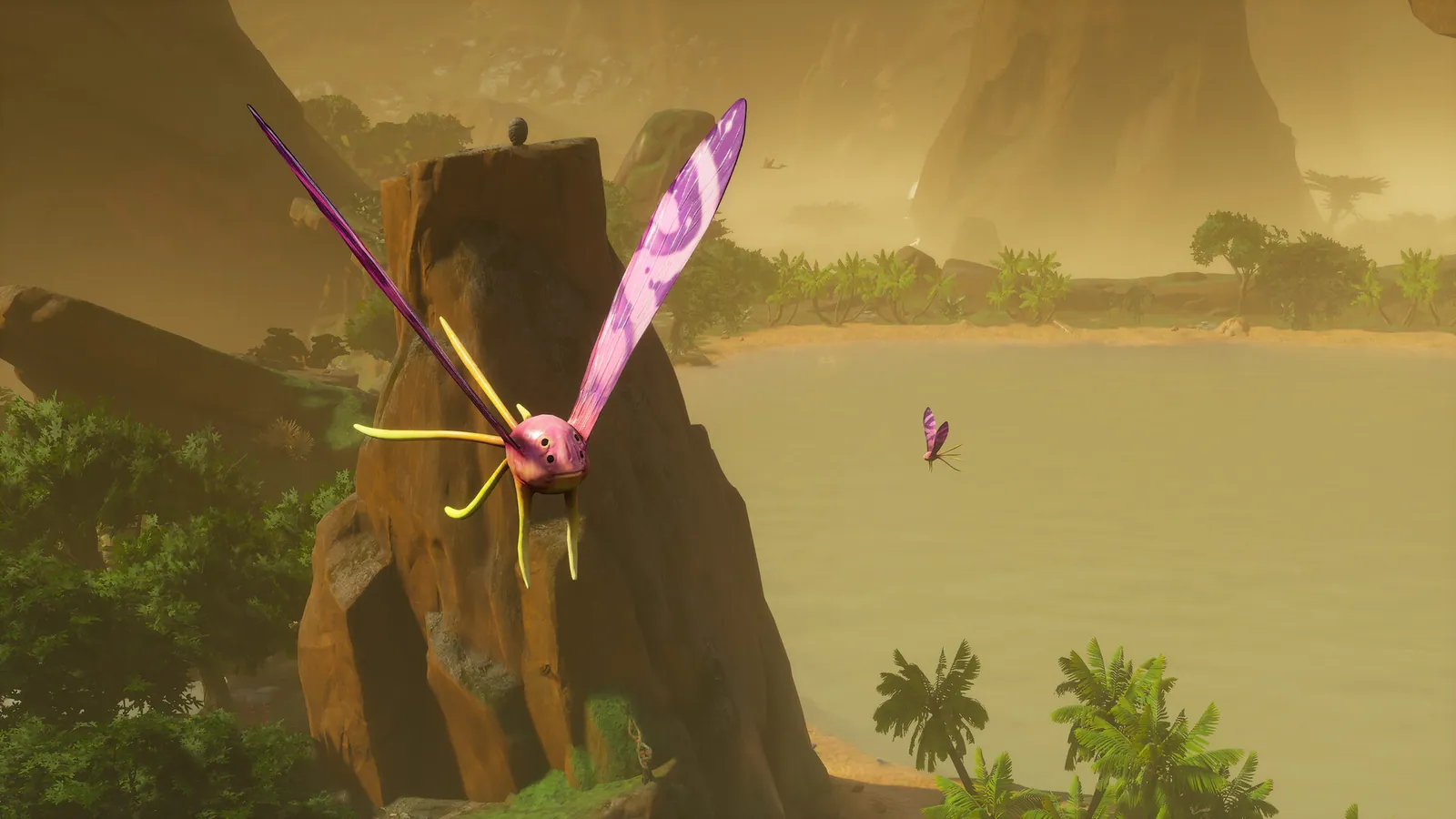
Creatures in Blind Descent are part of the ecosystem rather than a list of enemies. They react to a player, defend ground they occupy, and in some cases follow. The plants do the same job with less warning: electrified growth discharges, swinging infection plants hit what passes, and acidic water damages anything standing in it. Biomes covers the ground all of it lives on.
The useful skill is not combat. It is reading a reaction early enough to choose between three outcomes: fight it, harvest it, or go around.
Reaction comes before aggression
The announcement describes creatures that react, hold territory and pursue. Those are different behaviours, and each calls for a different response.
A creature that reacts is deciding what you are. Backing away before it closes costs nothing; pushing closer commits both of you. A creature that holds territory has a patch it will not leave, which means the fight is optional as long as the route is optional. A creature that pursues has decided already, and the question becomes whether the ground between you and it favours a stand or an exit.
Most of the danger in the first hours comes from mistaking one for another. A territorial animal that charges a few steps and stops is not chasing; a reaction that looks like curiosity is sometimes the start of a pursuit.
Plants are the quieter hazard
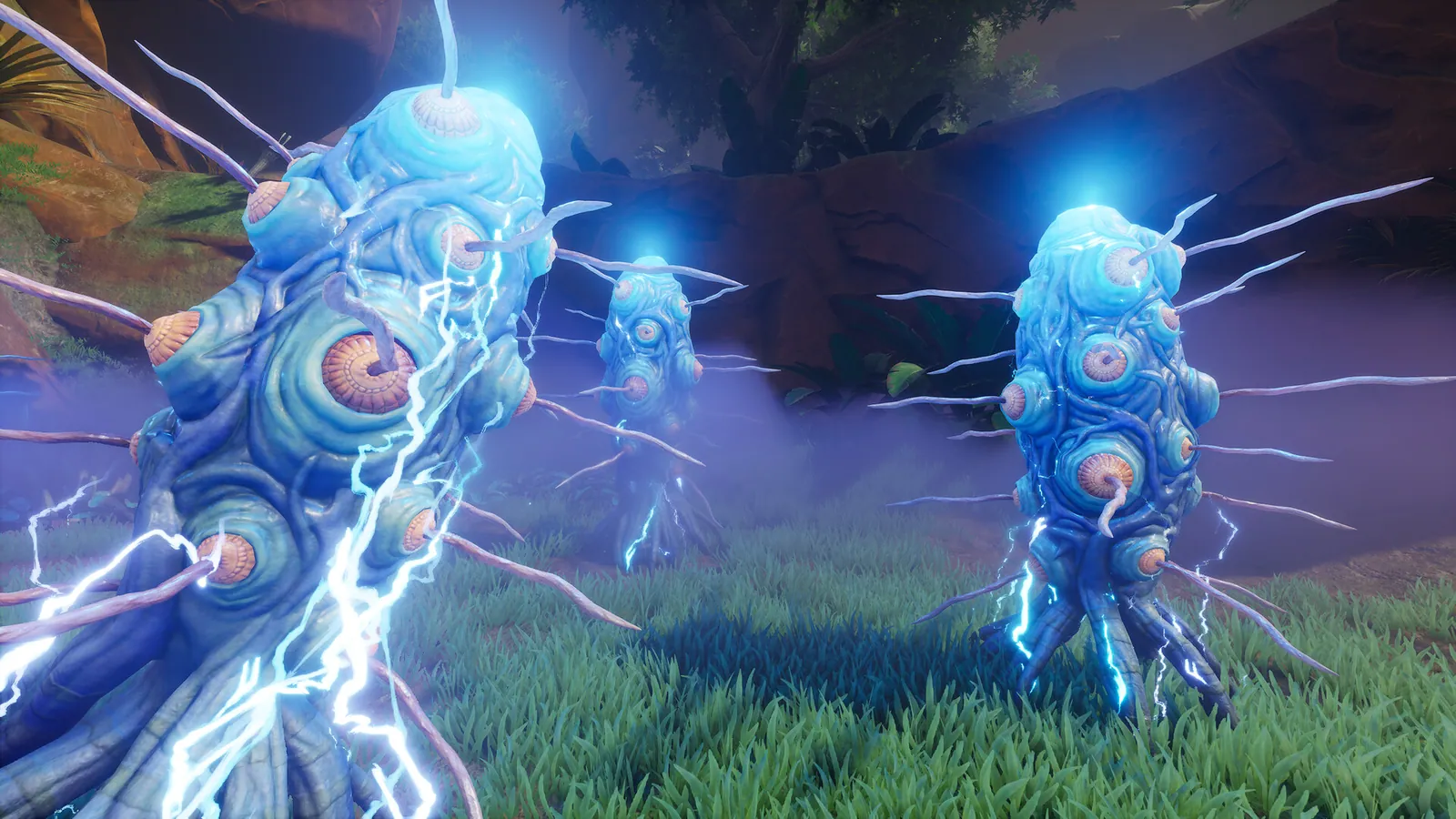
Vegetation does not need to chase to be lethal. Electrified plants carry current and discharge at close range, which makes the blue-white glow on a stalk a range marker. Infection Swing Plants, added to the playtest on October 16, 2026, swing across a path on a rhythm, so a corridor lined with hanging growth is a timing problem rather than a fight.
Acidic water is a third version of the same idea. It does not react, does not pursue and does not care what a player is carrying. Standing in it costs health; crossing it costs a decision about how narrow the crossing is.
The unifying rule is that vegetation punishes contact, so distance is the defence. A plant is only a problem once a player is inside its reach, and reach is usually visible: the length of a stalk, the arc of a swing, the edge of a pool.
Observe, scan, decide
The order matters more than the tool. Observation tells you what a thing is doing. Scanning tells you what it is. The decision comes after both, and skipping a step is how a harvest turns into a chase.
- 1Observe from cover
Watch for a few seconds. Does it move on a pattern, track you, or ignore you entirely?
- 2Scan before closing
The AI assistant supports scanning, and the scan is the step that turns a shape into information worth acting on.
- 3Decide the outcome
Fight, harvest or leave. Pick one before you move, because the choice gets more expensive at contact range.
The scan also solves a quieter problem: two plants can look alike and behave nothing alike. A bright stalk that pulses on a rhythm and a bright stalk that stays still may be the same species in different states, or two species that share a colour. Observation separates them faster than trial and error, and trial and error is what the ecosystem is built to punish.
Weapons and the stamina bill
Four weapon lines exist: bow, spear, axe and rifle. Dodge, block and the environment sit alongside them, and the environment is not a fallback. Water, narrow passages and growth that restricts movement all change what a weapon is worth.
The important number is stamina. A patch during the playtest set two-handed weapons to consume half the stamina bar per shot while keeping the same shot speed as short weapons. Stamina, rather than damage, became the thing that separates the classes. In practice a two-handed weapon is a burst: a few heavy hits, then a pause that a pursuing creature will use.
That makes the short weapons the default for exploration and the heavy ones a commitment. Carrying both means switching under pressure; carrying one is a decision about which mistake you would rather survive.
Tools that buy an exit
The stone mallet is the clearest example of a tool doing combat work without being a weapon. Its description reads "Uses slow, heavy swings to break surfaces and stagger large creatures." The damage line is low and the durability line is high, which matches the description: it is built to break things and last, not to win exchanges.
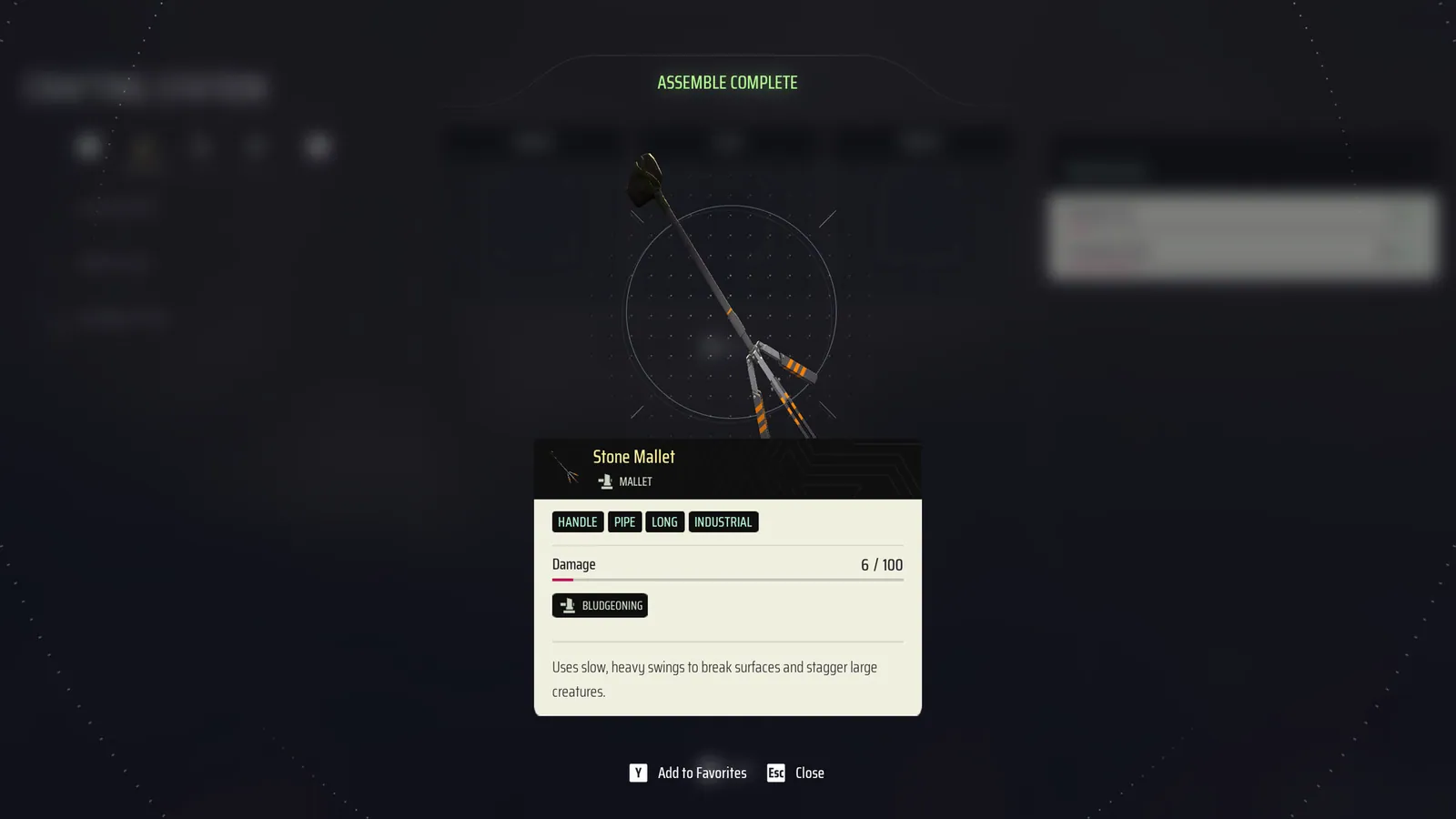
The stagger is the useful part. A large creature that has been knocked back gives a player the second or two needed to leave, and leaving is usually the better outcome than finishing. Crafting covers how the handle, head and binder slots decide which tool comes out.
When to walk away
The ecosystem does not reward clearing it. Growth returns to cleared ground, and a fight that costs medicine costs more than the route it opened.
Two costs make retreat rational. The first is infection, which builds from contact and needs a suppressor to clear; the item description recommends carrying several at all times rather than one. The second is time, because a long fight in the open is a long fight with whatever else heard it.
A team that splits the work handles this better than a solo player. One person watches the reaction, one checks the route, and nobody has to do both while backing away. Co-op covers the division.
| Threat | Tell | Response |
|---|---|---|
| Electrified plant | Blue-white glow, stalks angled outward | Stay outside the arc, scan, then pass wide |
| Swinging infection plant | Hanging growth across a path, regular motion | Time the gap or cut another route |
| Acidic water | Yellow, still, ringed by growth | Cross at the narrowest point or not at all |
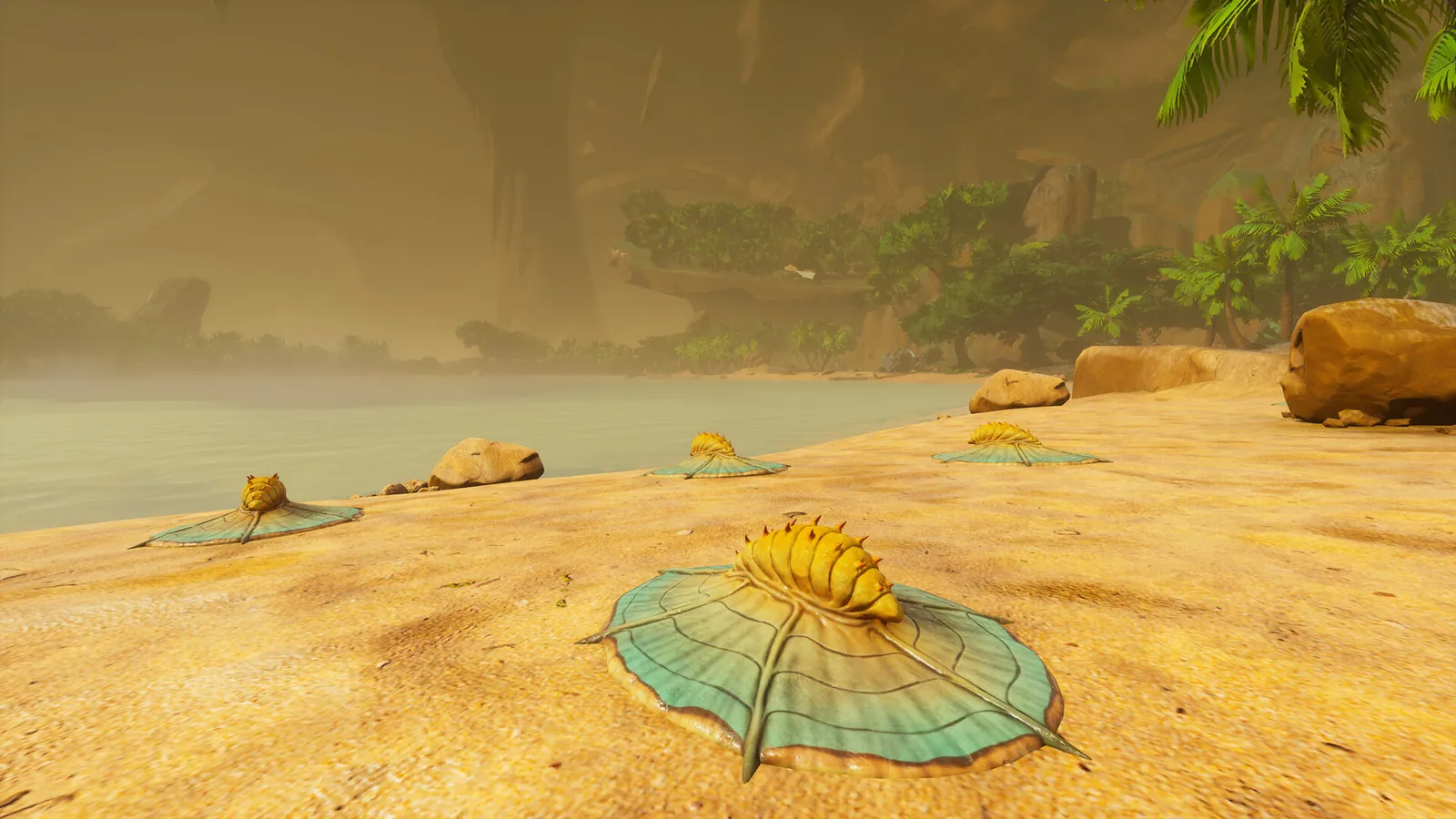
| Shelled creature | Low stance, planted feet, facing you | It is holding ground; go around the patch |
| Winged creature | Circling above open water or a clearing | Approach under cover, watch the air |
| Infected body | Growth over a body, erratic movement | Treat as hostile and keep the distance |
Do the plants attack?
Some do. Electrified growth discharges at close range, swinging infection plants strike what passes them, and acidic water damages anything standing in it.
Why does a two-handed weapon drain stamina so fast?
Two-handed weapons consume half the stamina bar per shot while firing at the same rate as short weapons, so stamina rather than damage separates the classes.
Is the stone mallet a weapon?
It is a tool. Its description says it breaks surfaces and staggers large creatures, which makes it useful for creating an exit rather than for winning a fight.
Should a team clear the creatures it meets?
Usually not. Growth returns, infection is a cost, and a route around a territorial creature is cheaper than the medicine a fight consumes.
Look first, scan second, commit third. That order covers creatures, plants and water alike, and it survives contact with biomes nobody has seen.
The other half is knowing when the answer is no. A player who retreats from a fight has lost nothing but time; a player who takes it has spent stamina, durability and possibly a suppressor, and the ground beyond a lost fight is usually reachable another way.