The underground in Blind Descent is an ecosystem, not a cave system. Dense jungle fills the shafts, weather happens far below the surface, and standing water collects in basins between the growth. The environment counts as a threat in its own right, and it is usually the first one a team meets.
The habit that pays is looking at a space before committing to it, because most of what hurts a player down there announces itself in colour before it does anything else.
The difference between a cave and a jungle
Caves are geology. They have a shape, a temperature and a set of minerals, and nothing in them grows back after you break it. The space under the mine behaves differently. It has a food chain, growth that responds to neglect, and water that sits where the terrain allows it.
That distinction changes what a map means. In a cave, a corridor is a corridor. Here, a passage is a habitat: something lives in it, something grows across it, and the growth may be the thing that notices you first.
What fills the space
The ground changes as a team moves away from the elevator, and each kind of space changes the questions worth asking.
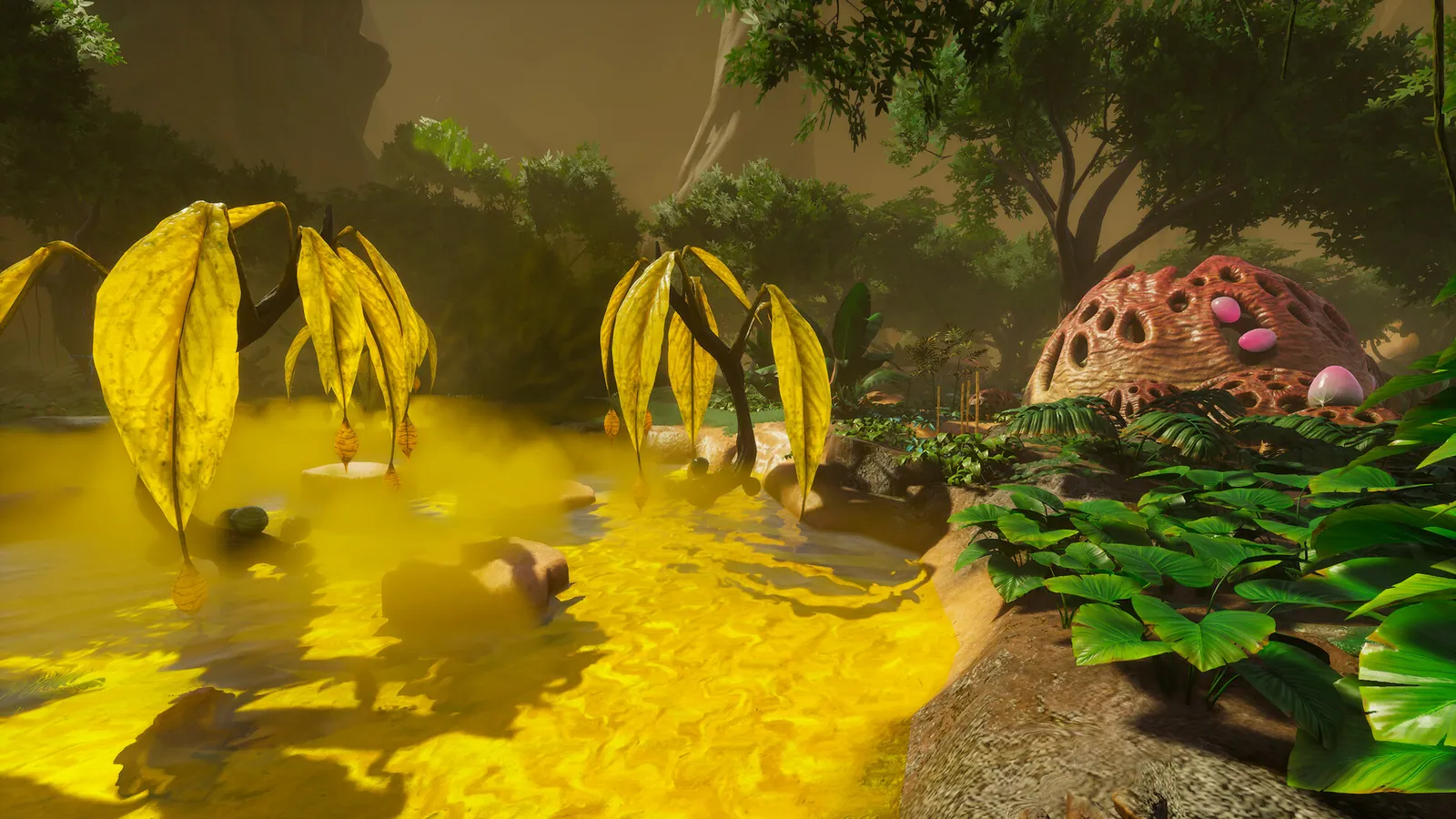
Dense growth is the default. The jungle is thick enough that sight lines are short, which matters more than it sounds: a creature that reacts to movement has an advantage in cover, and a player relying on a bow has none of it. Moving through it is slow, and slow movement is how a fight starts on the wrong terms.
Water collects in pools and channels. Some of it is toxic, and the yellow pools are the clearest warning in the game. An open shoreline is a place to approach slowly rather than a place to cross in a straight line, because the surface gives away very little about what is under it.
Depth is the direction of travel. The further a team goes, the less the space resembles the facility above it and the more it resembles something that was never built for people. Deeper passages are where the ecosystem stops being scenery and becomes the terrain a player has to survive.
Weather is a hazard, not a backdrop
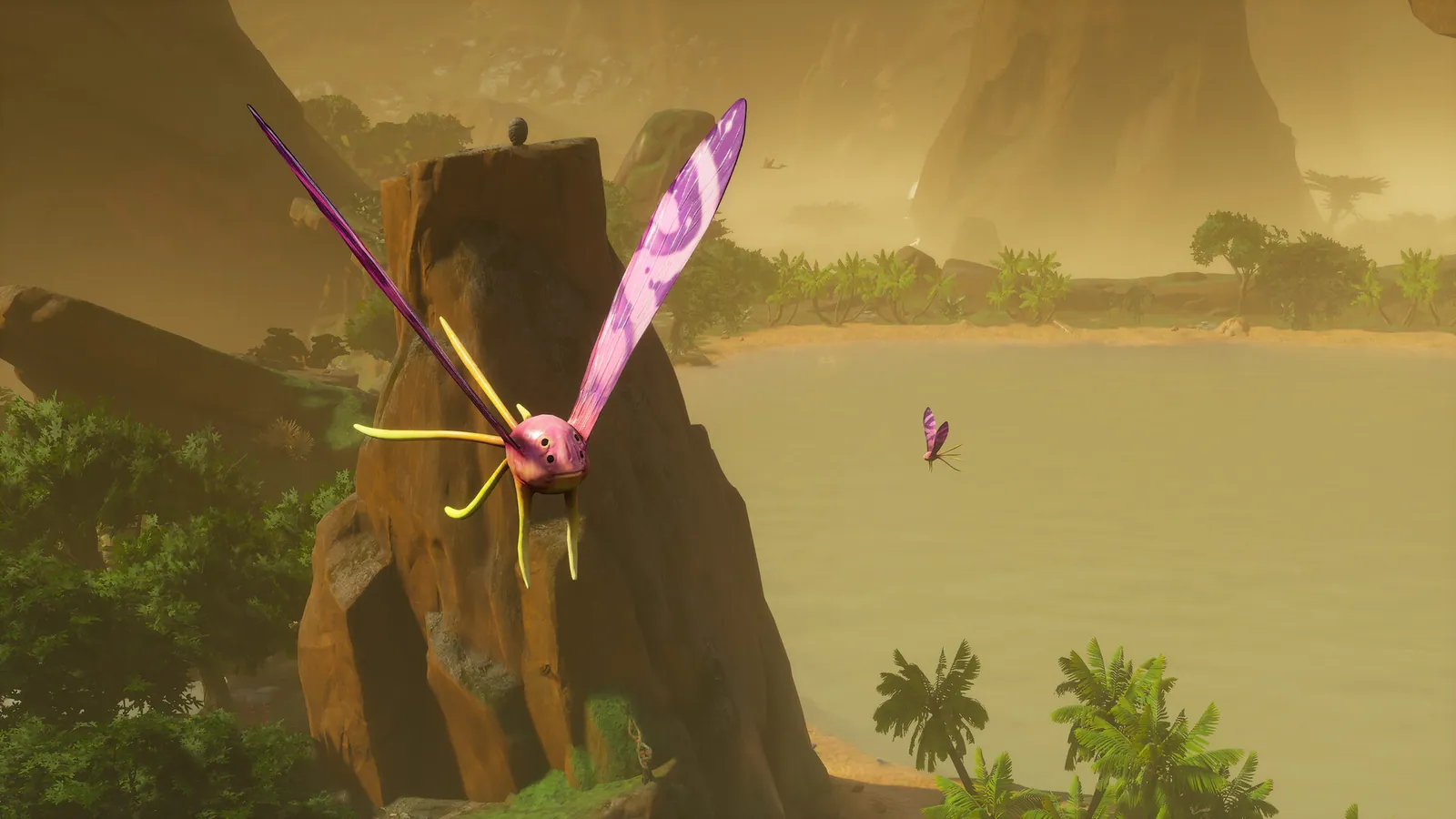
Weather underground is strange, and the game treats it as an event with consequences rather than atmosphere. It appears in the same category of threats as creatures and toxic water, which is the useful way to read it: something that arrives, changes what is safe for a while, and then passes.
The practical consequence is structural. Base durability has to withstand weather as well as growth, which means a shelter that survives a quiet stretch can still fail later. Repairing before an event costs less than rebuilding after one. Base building covers the upkeep side.
Timing matters as much as structure. A repair made before an event costs materials; a rebuild after one costs materials and whatever was stored inside. A team that treats the weather as a schedule rather than a surprise keeps its base for longer.
Growth that answers back
The jungle is not passive. Vines, fungal growth and creeping organisms move into structures that are left alone, and the world regenerates what a team clears. A base is therefore a maintenance task, and a route cleared on one trip may not be clear on the next.
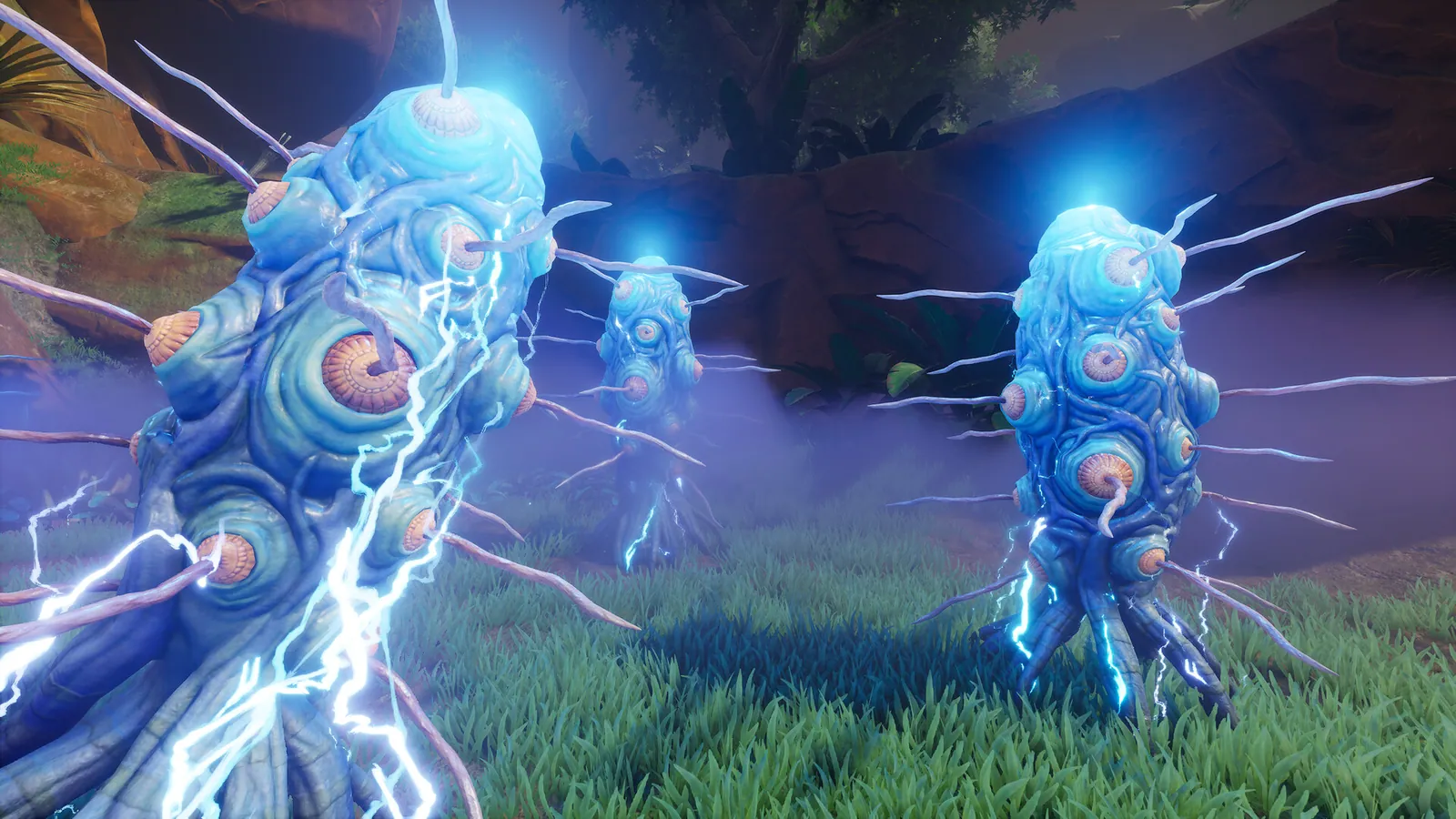
Two plant behaviours are worth knowing by sight. Electrified growth discharges at close range, which makes a lit plant a hazard rather than a landmark. Infection Swing Plants, added during the playtest in October 2026, swing at what passes them, so a corridor lined with hanging vegetation is a corridor with a timing problem. Infection covers what happens when one of those hits.
Reading a space before you enter
A repeatable habit beats a list of plants, because the ecosystem changes and a team will meet growth it has not seen. The order that costs least is short.
- 1Read colour and glow
Yellow means acid, blue-white means current, and dense unlit green means cover. This pass costs a glance and rules out the worst ground.
- 2Watch what moves
Does the growth track you, close on your position, or swing on a rhythm? A plant that reacts is a plant with a range.
- 3Check the water
Still pools at the base of growth are where runoff collects. Approach the edge, not the middle.
- 4Sample last
Harvest only after the first three passes. A material is worth less than a run, and the closest plant is usually the one that was waiting.
The passes are cheap because they happen at a distance. None of them needs a tool, a fight or a commitment; each one only narrows the set of things that could go wrong before a player is close enough for the answer to matter.
The same order, as a quick reference.
| Signal | What it suggests | First move |
|---|---|---|
| Blue-white glow on stalks | Electrified growth | Keep distance, scan from outside reach |
| Yellow pool, still surface | Acidic water | Find the narrowest crossing or go around |
| Hanging vegetation across a path | Swinging infection plants | Time the gap or cut a different route |
| Growth crossing a doorway | Neglect, active spread | Clear it before sleeping there |
| Open water, no visible bottom | Depth hidden by the surface | Cross at a narrow point or keep to the edge |
The list of biomes is still growing
December 2, 2026 is an Early Access launch, and the studio's plan for the run to 1.0 includes new biomes alongside new creatures and resources. The jungle, the water and the deep passages in the launch build are part of that larger set rather than the whole of it.
That has a practical edge for anyone learning the environment in the launch build. A habit built around reading colour and reaction transfers to a biome nobody has seen. A habit built around memorising one plant does not. Early Access scope covers what arrives in batches after launch.
Is the underground one biome or several?
It reads as one connected ecosystem with distinct spaces: dense jungle, water and deeper passages, with more biomes added during Early Access.
Is the weather actually dangerous?
Weather events are treated as hazards rather than atmosphere. They affect what is safe to do and put pressure on anything built to last.
Why does cleared ground grow back?
Vines, fungal growth and creeping organisms move into structures that are left alone, and the ecosystem regenerates what a team removes.
Will new biomes arrive after launch?
Yes. New biomes are listed among the content added during Early Access on the way to 1.0.
Whatever else changes, a few things cover most of the risk. A lamp, because the jungle is legible only when lit. A cutting tool, because growth blocks routes and the block is often the point. And a habit of stopping at the edge of a new space for a few seconds before walking into it.
The last one is the cheapest and the one most often skipped. A team that scans first fights less, because half the hazards below the mine are things a player walked into while looking at the objective.