Blind Descent begins in 2071 at a mine that has just opened on Mars. A pioneer team goes down, stops reporting, and a second team of up to four follows them into the shaft. That second team reaches ten miles below the surface, loses the elevator on the way, and finds itself cut off from the people who sent it.
The rescue is the plot. The place is the story, and the two are tied together by one hard fact: the way in no longer works as a way out.
The premise, beat by beat
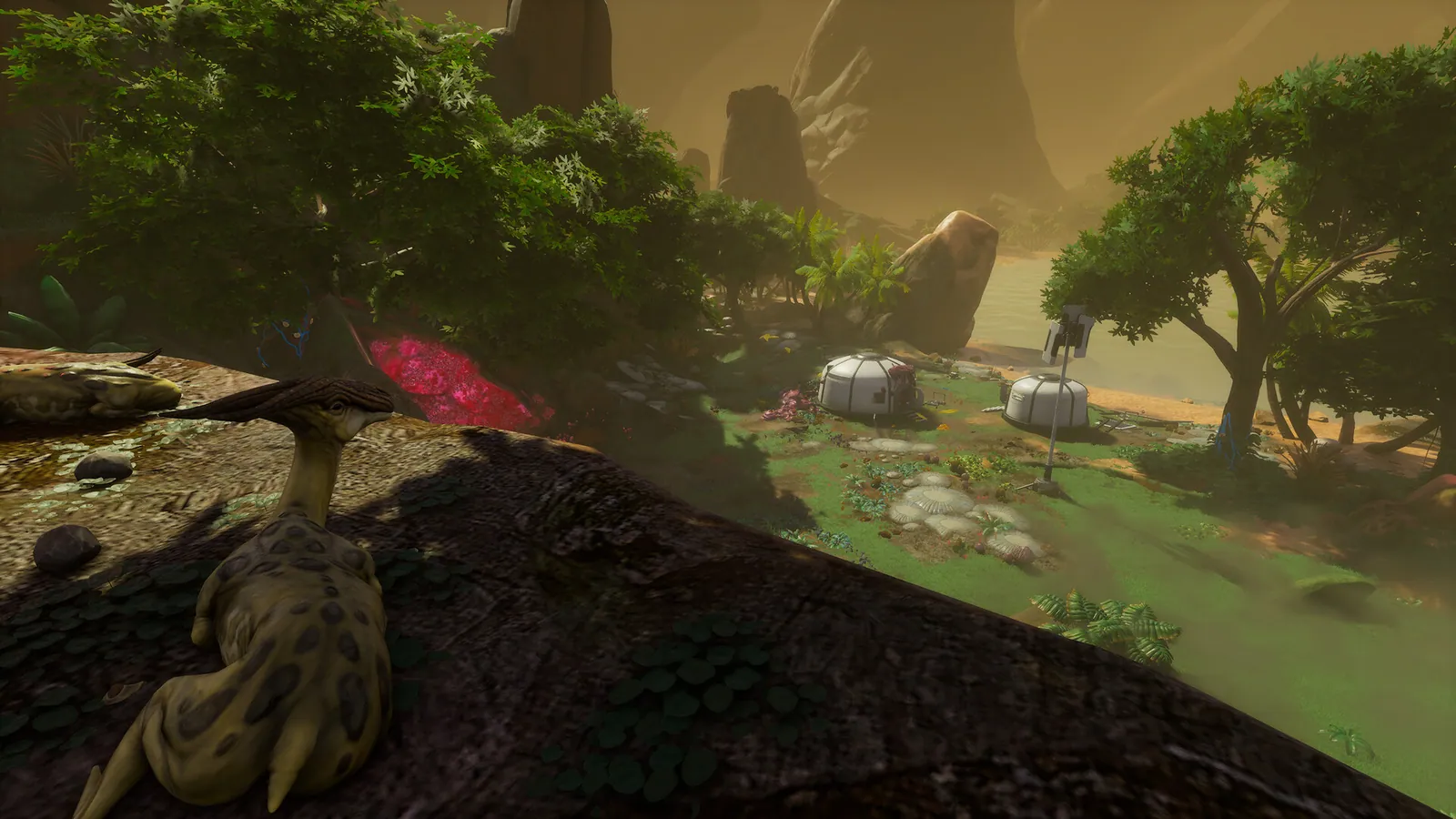
Everything the announcement gives about the setup fits in a short sequence, and each beat sets up a system.
| Beat | What happens | What it leaves behind |
|---|---|---|
| 2071 | A new mine opens on Mars | A working shaft and a reason to be there |
| The first team | A pioneer crew enters and stops reporting | A reason to send anyone else down |
| The second team | Up to four players descend after them | A co-op team with a rescue objective |
| Ten miles | The shaft runs far deeper than expected | A distance that cannot be walked back |
| The fall | The elevator drops; only a few survive | A broken route to the surface |
| The silence | Contact with the surface is lost | A signal that has to be rebuilt |
The order matters. The depth is established before the fall, so the fall is not a setback on a short trip; it strands the team ten miles below the only exit. The depth is not a number on a map. It is the reason every later problem has to be solved from inside the ecosystem rather than from the surface.
Why the elevator is the hinge of the story
A rescue mission needs a way home, and the elevator was it. When it fails, the objective changes shape. Finding the missing pioneers is still the reason the team is there, but getting out becomes a project rather than a walk back to a lift.
That single failure is what turns the underground from a level into a place with infrastructure. The team cannot call for help, cannot climb out, and cannot resupply. Whatever exists below has to be made to work again, using what the ecosystem and the abandoned facilities provide.
The AI assistant
An AI assistant comes down with the team and supports exploration and scanning. The announcement describes it as an assistant for those two jobs and gives it no name, no history and no voice of its own.
In play, that framing does the quiet work of explaining why a player can point at an unfamiliar organism and get information back. The underground is full of things that look edible, useful or inert and are none of those, and the assistant is the reason the game can tell you what you are looking at without a narrator stepping in.
Three jobs that overlap
The stated goal breaks into three tasks, and they are not sequential. The team has to find the missing pioneers, carry energy to the printer, and carry energy to the signal booster that restores contact with the surface.
- 1Find the missing team
The reason the second team descended, and the thread that keeps the story moving outward.
- 2Power the printer
One of two machines that has to be brought back online before the team can push further.
- 3Power the signal booster
The link to the surface, and the only route back to the people who sent the team down.
The three push against each other. Searching for the pioneers means leaving the safe part of the map, powering the printer means spending energy that the booster also needs, and the booster is only useful once there is something to report. The result is a loop rather than a checklist: explore to find, find to power, power to reach further.
The rescue is also what gives the other two jobs a deadline. Every hour spent routing power is an hour the pioneers have spent alone, and the map keeps offering detours that look like progress.
Science or symbiosis
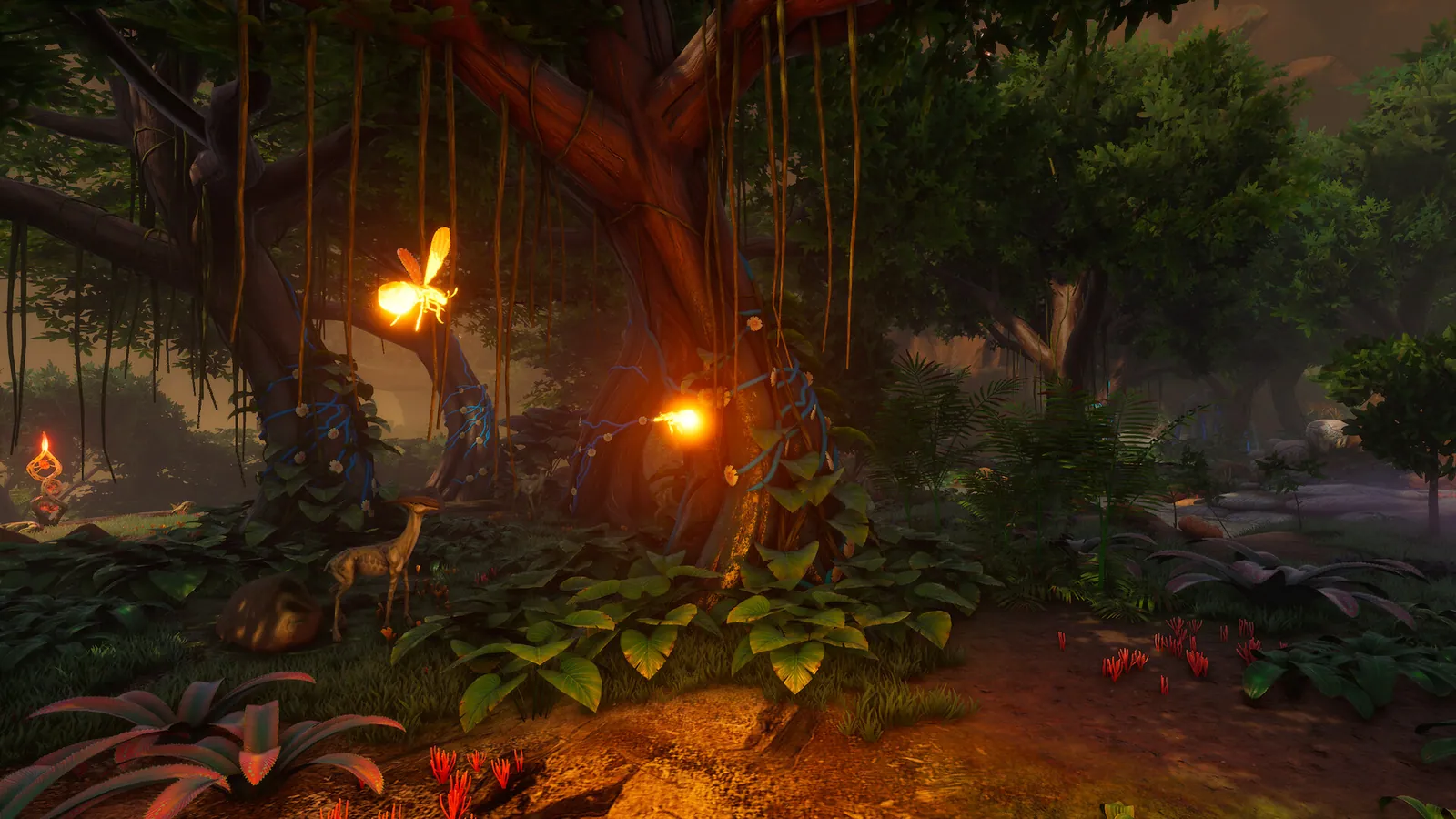
The other structural choice is what the team does with the ecosystem itself. The design presents two directions. One keeps the team human and leans on science, tools and preparation. The other accepts symbiosis, which grants new abilities and changes how the character looks, at a cost the announcement acknowledges without itemising.
Neither direction is framed as the wrong one. The difference is what a player is willing to trade for capability, and the trade is physical as well as mechanical: mutation shows on the body. Infection and mutation covers how that pressure builds during a run and what clears it.
This is also where the rescue premise and the survival systems meet. A team that stays human depends on supply, maintenance and medicine. A team that adapts depends on the place itself, which is a different kind of vulnerability.
How the story is told, and how much of it ships
The announced direction is exploration, discovery and environmental storytelling. That places the narrative weight on what the underground shows: growth swallowing a structure, a creature behaving in a way that implies a food chain, a facility that was built for people and then abandoned to something else.
The consequence for a player is that the story rewards attention rather than progression. Walking past a room tells you less than stopping in it. The same instinct that makes a plant into a resource makes a collapsed corridor into information about who was there before.
Biomes covers what those spaces contain and how to read them before entering.
December 2, 2026 is the start of Early Access, not the finished campaign. The studio describes the launch build as having core mechanics in place with content still being filled in, and it plans to add story, biomes, creatures and resources in batches on the way to 1.0.
That means the rescue can be started at launch without being finished at launch. The studio's own estimate is a 1.0 release within a year of the Early Access launch, described as tentative and subject to slipping. Early Access scope sets out what the first build includes.
Who is the missing team?
A pioneer crew that entered the newly opened mine before the player's team. The announcement does not name its members or say how many went down.
How deep does the mine go?
Ten miles. The team descends that far, the elevator fails, and contact with the surface is lost.
Can the story be played solo?
Yes. Single-player is supported, and co-op fills the same team of up to four rather than adding a separate mode.
Is the story finished on December 2?
No. Early Access ships with the core mechanics in place, and story content continues to arrive through updates on the way to 1.0.
The tension is the story. A team that only chases the rescue runs out of capability; a team that only builds runs out of reason. The underground is where both impulses have to be balanced, and the co-op structure is what lets a group split them.